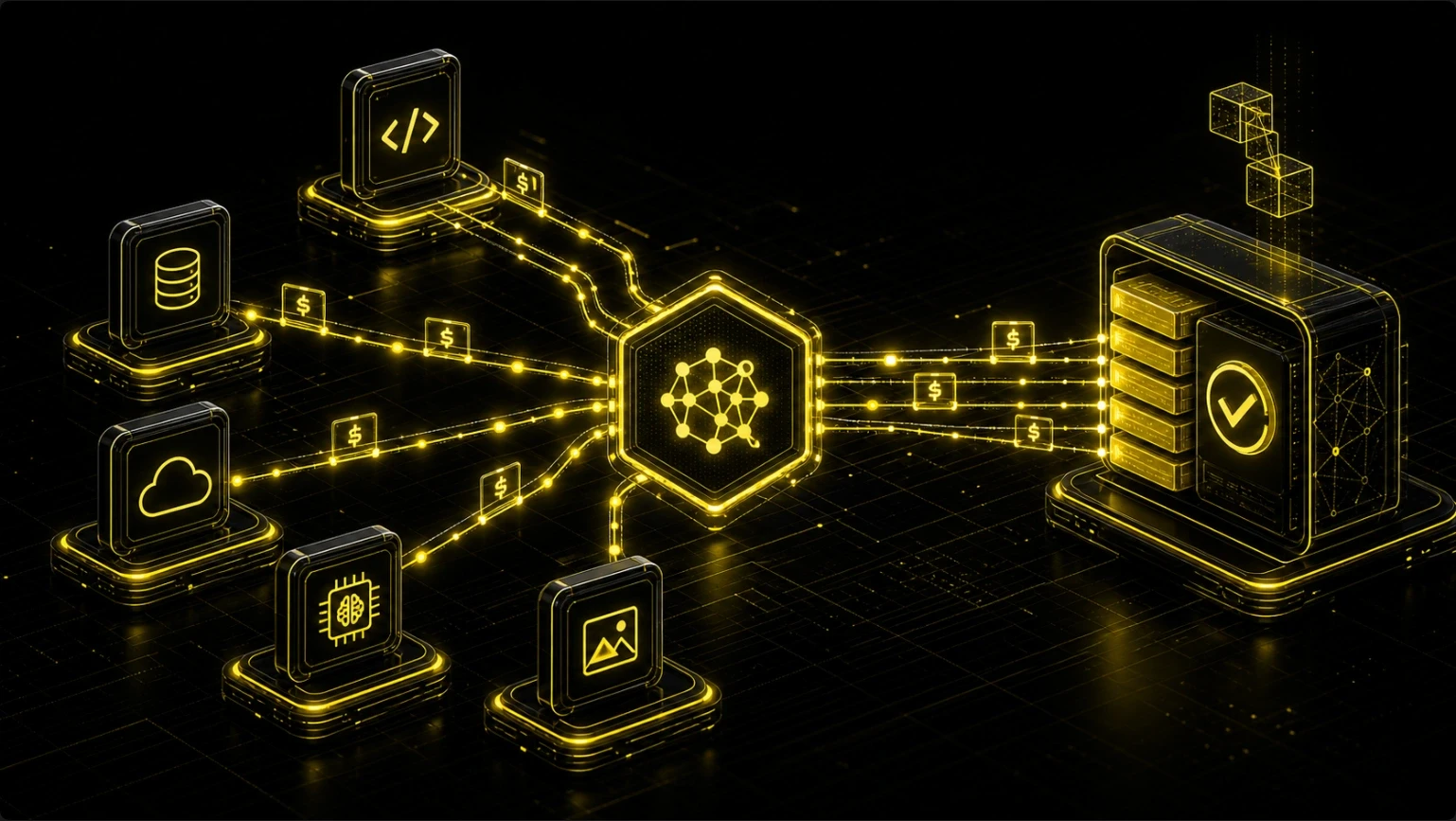

An institution should consider GOAT Network institutional infrastructure when its mandate requires three properties together: economic activity centered on Bitcoin, programmable execution compatible with Ethereum tooling, and a bridge design whose disputed claims can ultimately be enforced through Bitcoin transactions. That combination is narrower than “we need an EVM chain.” It is also more demanding than “we want Bitcoin exposure.”
GOAT is not automatically preferable to an Ethereum rollup, an EVM sidechain, or another Bitcoin-aligned network. Each category places settlement, data, bridge control, liveness, and governance in different hands. The correct institutional question is whether GOAT's allocation of those responsibilities matches the investment policy and operating model.
That question has an evidence-based answer. A committee can screen the mandate, identify every material control, test adverse events, and specify rejection conditions before discussing an allocation or production deployment.
Start With the Mandate, Not the Network
The comparison is relevant when Bitcoin is more than a marketing association. A suitable mandate may require BTC-denominated gas, Bitcoin-linked settlement, or applications that keep Bitcoin capital inside a programmable environment. It may also require Solidity applications and familiar EVM development tools because the institution already operates Ethereum systems.
Three example mandates produce different shortlists.
Institutional mandate | Infrastructure implication | Is GOAT naturally eligible? |
|---|---|---|
Deploy an existing Solidity application with Ethereum settlement | Prioritize mature Ethereum rollups, data availability, and withdrawal controls | Only if Bitcoin alignment adds a separate requirement |
Build BTC-backed markets with EVM contracts and Bitcoin-oriented settlement | Evaluate bridge security, BTC operations, EVM portability, and Bitcoin confirmation policy together | Yes, subject to diligence |
Obtain passive price exposure to BTC | Infrastructure is not the primary decision | Usually no |
This screen prevents a common logic error. A network can have distinctive technology without solving the institution's problem. Conversely, a less novel system can be the better choice when it has the required settlement venue, liquidity, custody support, governance history, and operational evidence.
The committee should write the mandate in testable terms. “Bitcoin security” is not testable by itself. “A withdrawal claim must have an independently executable challenge path tied to Bitcoin transactions” is testable. “Ethereum compatibility” is broad. “The application must compile with the current Solidity toolchain, preserve expected opcode behavior, and integrate with our existing signing policy” is operational.
GOAT advances only when those requirements point toward its architecture before the brand name appears in the decision.
EVM Compatibility Does Not Identify the Settlement System
GOAT uses an EVM-compatible execution environment, described in its documentation as a Type-1 zkEVM design. That can reduce application migration work because developers can use familiar contracts, wallets, and Ethereum-oriented tooling. It does not make GOAT an Ethereum-settled rollup.
Execution compatibility answers what code can run and how closely the environment follows Ethereum semantics. Settlement architecture answers which system resolves the economically important state or bridge claim. Data availability answers where transaction data needed for reconstruction can be obtained. Sequencing answers who orders transactions before stronger confirmation. Bridge design answers how BTC enters and leaves.
Two networks can execute the same Solidity contract and expose similar JSON-RPC methods. Their institutional risks may still be materially different. One may settle to Ethereum and depend on its rollup contracts. Another may use an independent validator set and bridge. GOAT combines decentralized sequencing, Ziren-generated execution evidence, and a BitVM2-based Bitcoin bridge path. Those elements must be assessed as a system.
Portability also has limits. Contract code may migrate more easily than operations. Indexers, price feeds, bridges, custody integrations, multisignature workflows, transaction monitoring, gas management, and incident procedures remain network-specific. An institution that counts only Solidity engineering effort will understate implementation cost.
The useful comparison unit is therefore not “EVM chain versus EVM chain.” It is the complete path from transaction authorization through ordered execution, asset custody, final settlement, and recovery.
The Strategic Case Is Bitcoin Capital With Programmable Execution
GOAT becomes relevant when an institution wants BTC to participate in applications without reducing Bitcoin to a wrapped asset on an unrelated execution environment. The network uses bridged BTC as its gas asset and provides EVM-compatible smart-contract execution. This can support BTC-denominated application economics, treasury operations, and developer workflows in one environment.
Consider a manager building a Bitcoin-backed lending or settlement product. Its application team may prefer Solidity because existing code, audits, and developer skills are EVM-oriented. Its investment mandate may still require a credible relationship to Bitcoin for asset movement and settlement. GOAT addresses both requirements in one architecture.
The benefit is conditional. Bridged BTC is not identical to holding BTC in a simple, unencumbered Bitcoin address. The institution assumes bridge logic, operator availability, proof correctness, challenge liveness, software, keys, and governance. It must also fund gas and handle transaction accounting in the L2 environment.
The right statement is not “GOAT gives Ethereum applications Bitcoin's full security.” A more precise statement is that GOAT offers EVM-compatible execution with a Bitcoin-oriented settlement and bridge design. The strength of that design depends on the exact claim path, current deployment, and institution's ability to monitor or rely on independent monitors.
This distinction is important for investment memoranda. It preserves the strategic thesis and exposes the controls required to make the thesis operational.
Build a Settlement Control Ledger
GOAT's strongest differentiator for this comparison is not EVM support. Many networks support the EVM. The differentiator is its attempt to bind L2 execution and bridge claims to a BitVM2 dispute path enforced through Bitcoin transactions.
Bitcoin does not execute GOAT's zkEVM. Transactions execute in GOAT's environment. The sequencer network determines canonical ordering. Ziren provides compact evidence about computation. Bridge operators can provide BTC liquidity and seek reimbursement. Challengers or watchtowers must detect invalid claims and act within the relevant window. Bitcoin enforces the transaction path that results from those conditions.
An institutional control ledger should assign each handoff.
Control object | Evidence to request | Primary failure concern |
|---|---|---|
Canonical GOAT state | Sequencer certificate, validator-set record, block reference | Correct proof attached to the wrong fork |
Execution evidence | Program version, public inputs, proof status | Valid evidence for unintended code or state |
User BTC payout | Bitcoin transaction, destination, amount, confirmation policy | Wrong recipient, delay, or insufficient confirmation |
Operator reimbursement | Unique withdrawal reference and claim record | Duplicate or unsupported reimbursement |
Challenge capability | Independent watchers, data access, keys, fee funding | Formal challenge exists but cannot be executed |
Bitcoin completion | Transaction branch, timelocks, confirmation record | Congestion, reorganization, or missed deadline |
The BitVM2 1-of-n security formulation is valuable because one capable honest challenger can prevent an invalid path under the protocol assumptions. “Capable” carries operational content. The challenger needs complete data, correct software, valid keys, network access, Bitcoin fees, and enough time.
Institutions should not outsource this entire analysis to a label. They should request a walkthrough of one completed withdrawal and one simulated invalid claim. The evidence should let a reviewer connect the canonical L2 event to the exact Bitcoin transaction outcome.
Sequencing Creates a Separate Pre-Settlement Risk Window
Applications need usable confirmation before a Bitcoin-side bridge process finishes. GOAT uses a CometBFT-based sequencing layer with EVM execution handled by its execution client. This provides an ordered L2 state and faster application feedback, but it creates a confirmation level distinct from Bitcoin completion.
An institution should identify which business action follows each signal. A user interface may show a transaction after sequencer confirmation. A trading system may grant limited buying power. A treasury may wait for additional proof or bridge evidence. A custodian may recognize withdrawal completion only after the relevant Bitcoin transaction reaches its configured depth.
Sequencer decentralization matters because transaction ordering affects censorship resistance, availability, and the canonical history consumed by later proof and bridge logic. It does not remove every dependency. Validator concentration, network partition, software correlation, governance changes, and delayed set updates can affect operations.
Architecture diagrams need to be supported by current operating facts:
active validator and sequencer participation;
concentration by operator, hosting provider, and client;
fault threshold and recovery procedure;
validator-set update handling in bridge evidence;
behavior during a sequencer halt;
rules for transaction inclusion and reorganization;
monitoring of divergence between execution and consensus components.
The committee should also define a maximum acceptable pre-settlement exposure. If the application extends credit after fast confirmation, the amount should reflect the possibility that proof, bridge, or Bitcoin completion is delayed. Fast confirmation improves usability. It is not permission to collapse all finality states into one.
Custody and Liquidity Can Dominate Protocol Design
Institutional adoption often fails because operating controls are incomplete. The institution needs an approved path to acquire and hold the gas asset, bridge BTC, reconcile balances, authorize transactions, and recover from failed or delayed withdrawals.
GOAT's use of BTC as gas may align incentives with a Bitcoin mandate, but it changes treasury procedures. Wallets require enough bridged BTC for operations. Gas funding must be separated from principal where policy requires it. Small residual balances need accounting treatment. Signers must understand the target network and transaction format.
The peg-out process adds liquidity dependencies. A bridge operator may pay a withdrawing user before completing reimbursement. That can improve user experience, yet the operator must have available BTC and a reliable reimbursement path. A safe bridge can still be temporarily unavailable if operators stop quoting or lack capital.
Before approval, operations teams should test:
deposit and withdrawal minimums, timing, and status evidence;
custody-provider support for the current network and assets;
address allowlists and transaction-policy enforcement;
reconciliation between Bitcoin, GOAT, custodian, and internal ledgers;
handling of stuck, replaced, duplicate, or canceled transactions;
emergency communication and escalation ownership;
accounting treatment for gas, bridge fees, and pending claims.
These requirements can outweigh code compatibility. A protocol may look suitable to the investment team and remain unusable because custody, compliance, or accounting cannot support it. That is a valid rejection, not an implementation detail to defer.
Compare Infrastructure by Settlement Mandate
There is no single “best” Ethereum-compatible scaling infrastructure for every institution. Categories optimize different objectives.
An Ethereum rollup is a natural candidate when Ethereum settlement, Ethereum-native liquidity, and established rollup tooling are central. The institution still needs to examine sequencer control, proving or challenge mechanics, data availability, bridge contracts, governance, and upgrade keys.
An EVM sidechain may offer operational simplicity or mature integrations for a specific use case. Its validator and bridge security generally need to be evaluated independently from Ethereum. It can be appropriate when the mandate accepts that security model and values ecosystem maturity.
A Bitcoin-aligned EVM system becomes relevant when BTC is the economic center of the application. Within that category, projects differ in bridge assumptions, proof systems, data availability, sequencing, Bitcoin commitment, withdrawal design, and current operating evidence.
GOAT is distinctive when the shortlist requires Bitcoin-oriented BitVM2 settlement, BTC gas, decentralized sequencing, Ziren evidence, and EVM compatibility together. It is less compelling when the institution primarily wants Ethereum settlement, maximum existing liquidity, broad custody coverage, or a long production history.
A fair comparison therefore uses weighted requirements, not a universal score. A committee can assign mandatory, preferred, and irrelevant status to settlement venue, asset model, execution compatibility, bridge challenge model, data availability, validator distribution, custody support, liquidity, governance, and incident history. A mandatory failure removes a candidate even if its aggregate feature score is high.
Governance Determines Whether Technical Controls Persist
Architecture describes the intended path. Governance determines who can change that path, how quickly a change takes effect, and what happens to assets during the transition. For an institution, upgrade authority is part of the security model.
The diligence team should inventory every material administrative capability. The list includes bridge contract upgrades, verifier changes, sequencer-set rules, emergency pauses, parameter updates, signer rotation, and treasury controls. For each capability, record the controlling account or multisignature, signature threshold, signer independence, timelock, public notice process, and rollback procedure.
An emergency pause can reduce losses during an exploit. It can also interrupt withdrawals or application operations. The institution needs predefined treatment for both outcomes. Risk policy should state who can stop new deposits, whether positions may be reduced during a pause, how customers are informed, and which evidence authorizes resumption.
Upgrade sequencing is particularly important for the bridge. A claim may be created under one verifier or sequencer-set format and completed after a new version activates. The protocol needs an unambiguous rule for in-flight claims. Reviewers should test whether old evidence remains valid, whether duplicate claims can cross the version boundary, and whether a paused transaction graph can be safely resumed.
Governance concentration is not automatically disqualifying. Early infrastructure sometimes uses narrower administrative controls to respond to defects. The decision depends on disclosure, safeguards, signer quality, timelocks, monitoring, and the institution's exposure limit. What is unacceptable is an undocumented power that can alter settlement assumptions after approval.
The committee should schedule periodic revalidation. A network approved under one validator distribution, bridge version, or governance configuration may no longer satisfy the mandate after an upgrade. Approval is attached to a control state, not permanently to a brand.
Test the Fit Against Two Real Mandates
A BTC market-infrastructure mandate provides the stronger GOAT case. Assume a firm wants to deploy EVM contracts for BTC-backed collateral, pay execution fees in BTC, and retain a Bitcoin-oriented exit and dispute model. Existing Solidity expertise lowers development friction. GOAT's architecture addresses the combined requirement, so the firm can advance to bridge, custody, liquidity, governance, and failure testing.
An Ethereum liquidity mandate produces a different result. Assume a fund needs direct access to mature Ethereum-native collateral, integrations, and settlement under an established Ethereum rollup model. Bitcoin settlement adds no portfolio requirement, and operational teams already support the selected Ethereum environment. GOAT's distinct design does not compensate for the additional bridge and custody work. The rational decision may be to exclude it from that deployment.
A third case may justify observation without allocation. An institution can value GOAT's architecture but require a longer operating history, broader custody coverage, or more distributed challenge infrastructure. It can define measurable watch conditions and reassess later. This is more useful than a vague “too early” conclusion because it specifies what evidence would change the decision.
Run Failure Drills Before Assigning Capital
A tabletop exercise reveals whether architecture and operations connect. The institution should model at least five incidents.
First, the sequencer network halts after a deposit or withdrawal is recorded. Determine which state remains canonical, which data is available, whether proofs continue, and which user actions are blocked.
Second, proof generation is delayed. Identify which applications continue under fast confirmation, what exposure accumulates, and which controls stop new risk.
Third, bridge operators stop serving withdrawals. Separate asset safety from withdrawal liveness. Define alternative operators, queue behavior, communication, and maximum tolerated delay.
Fourth, an invalid reimbursement claim appears during high Bitcoin fees. Confirm that independent watchers can reconstruct the claim, fund the challenge, replace a low-fee transaction if needed, and meet the deadline.
Fifth, governance upgrades the bridge, verifier, or sequencer-set format while claims are pending. Require a migration rule for in-flight state and identify who can pause, resume, or override normal processing.
For each incident, document four outputs: the safety state, the liveness state, the accountable owner, and the evidence needed to resume. “Network degraded” is too vague for an institutional incident plan.
These drills also expose correlation. Multiple watchtowers may share one RPC provider. Validators may share hosting. Treasury and bridge operations may rely on the same signer. Independence should be measured by failure domain, not participant count alone.
Request Evidence Before Making the Comparison Final
A decision packet should contain current, reproducible evidence. Marketing language and architecture papers are useful starting points, but production approval requires deployed-system facts.
The technical package should include network and contract identifiers, code versions, audits, upgrade authorities, validator status, proving behavior, bridge transaction paths, challenge procedures, and monitoring coverage. The operational package should include supported custody routes, liquidity observations, fee policy, incident ownership, reconciliation examples, and service dependencies.
The governance package should identify which decisions are onchain, multisignature-controlled, or organization-controlled. It should show timelocks, emergency powers, signer distribution, disclosure practices, and handling of pending bridge claims during upgrades.
The committee should then state explicit rejection conditions. Examples include insufficient custody support, inability to reproduce a bridge claim, concentrated challenge infrastructure, undefined in-flight upgrade handling, unacceptable liquidity depth, or confirmation states that cannot be mapped to internal risk limits.
Approval should also be staged. A low-value technical deployment can validate wallet, RPC, contract, bridge, monitoring, and accounting workflows. Exposure can increase only after the evidence remains consistent across normal and adverse events.
GOAT deserves institutional consideration when it solves a mandate that general Ethereum scaling infrastructure does not solve as directly. The reason is the combined architecture: Bitcoin-oriented settlement, EVM-compatible execution, BTC gas, decentralized sequencing, and a BitVM2 bridge model. The same architecture also creates a specific diligence burden. A defensible decision names both.
Frequently Asked Questions
Is GOAT Network an Ethereum rollup?
GOAT provides EVM-compatible execution, but that does not make it an Ethereum-settled rollup. Its Bitcoin-oriented bridge and settlement architecture must be evaluated on its own terms.
Does EVM compatibility make an application fully portable?
No. It can reduce smart-contract migration effort. Bridges, custody, gas, indexers, oracles, monitoring, and incident procedures remain network-specific.
Does Bitcoin execute GOAT transactions?
No. GOAT executes transactions in its own EVM-compatible environment. Bitcoin enforces relevant bridge transaction and dispute outcomes under the BitVM2 construction.
What is the main institutional reason to evaluate GOAT?
The strongest reason is a mandate that needs Bitcoin-centered assets and settlement together with EVM application compatibility. Without that combination, another infrastructure category may fit better.
What is the most important diligence test?
Reconstruct a real asset movement from canonical GOAT state through proof, bridge claim, challenge conditions, and Bitcoin outcome. Then identify every remaining operational and governance dependency.
Is considering GOAT the same as recommending an investment?
No. Infrastructure eligibility, technical approval, commercial deployment, and investment allocation are separate decisions. Each requires its own evidence, limits, and governance process.
Record the Reason for the Decision
An institutional choice is defensible when the committee can explain which mandate requirement GOAT satisfies, which controls make that benefit usable, and which conditions would reverse approval. “Bitcoin-secured” and “EVM-compatible” should be the beginning of that record, not its conclusion.
The final choice may be GOAT, another network, or no deployment. What matters is that settlement, execution, custody, liquidity, governance, and recovery are evaluated as one operating system. That is the level at which infrastructure risk reaches the institution.