
x402 Payment Integration vs. Agent Commerce Platforms: What Merchants Actually Need Beyond Payments
x402 Payment Integration vs. Agent Commerce Platforms: What Merchants Actually Need Beyond Payments
Meta Description: Compare an x402 payment integration with an agent commerce platform and learn when merchants need checkout, orders, webhooks, fulfillment, and reconciliation.
Slug: x402-integration-vs-agent-commerce-platforms
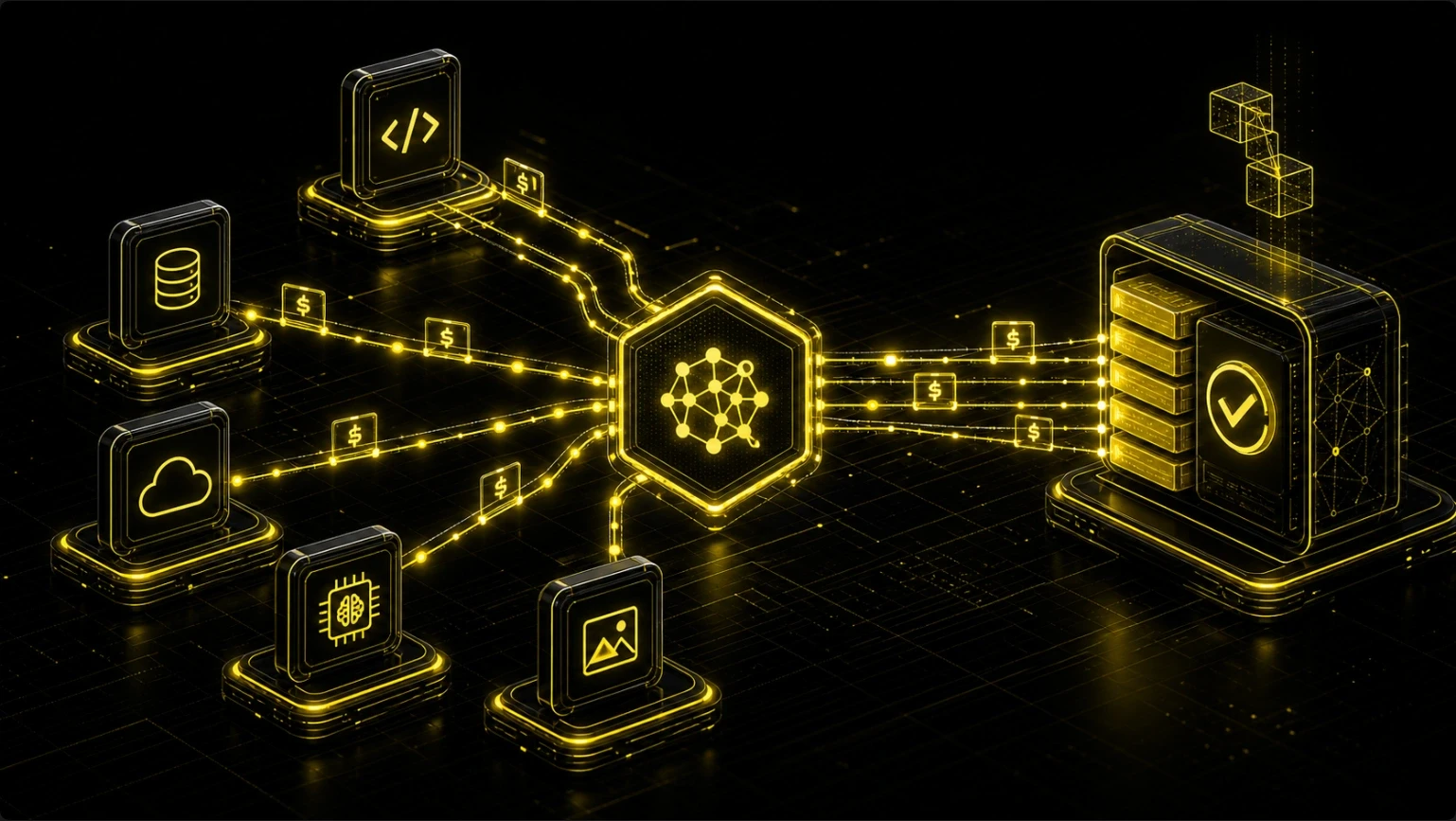
An x402 payment integration and an agent commerce platform solve different parts of a sale. An x402 integration can protect an HTTP resource, communicate a payment requirement, and verify payment before access. A commerce platform must operate the commercial state around that payment: the offer, order, buyer context, fulfillment, refund, receipt, and reconciliation record.
The distinction is not that one is technical and the other is commercial. Both are technical systems. The distinction is the state each system promises to own.
A basic payment path is compact:
Request -> 402 Payment Required -> payment -> verified retry -> resource.
A merchant lifecycle is longer:
Offer -> quote -> order -> payment authorization -> verification -> fulfillment -> receipt -> settlement -> reconciliation or recovery.
For a stateless data response, the first path may be sufficient. For a digital product, physical item, renewable entitlement, or service with asynchronous delivery, it usually is not. Merchants should therefore compare infrastructure by operational responsibility rather than by whether the provider says it “supports x402.”
What an x402 payment integration actually owns
x402 uses HTTP payment semantics to make a resource payable. A resource server can describe acceptable payment terms, reject an unpaid request with HTTP 402, and release the protected resource after a valid payment is verified.
That model is well matched to commercial units that align closely with one request:
one API response;
one data query;
one model inference;
one MCP tool call;
one downloadable asset;
one short-lived service action.
The integration typically owns the payment boundary around the protected route. Depending on the implementation, it may also use a facilitator to help verify and settle payments. It does not follow that it owns the merchant's product catalog, inventory, tax treatment, customer support, shipping, refunds, or accounting.
This boundary is a strength, not a defect. A protocol integration can stay small, composable, and suitable for developers that already operate the surrounding application. Problems begin when a merchant assumes that successful payment verification also means an order exists, delivery was completed, or revenue has been reconciled.
What an agent commerce platform must add
An agent commerce platform connects payment to an actual sale. Its minimum useful scope depends on the product, but merchants commonly need the following capabilities:
Capability | Record or decision the merchant needs |
|---|---|
Offer management | What is being sold, at what version and price |
Checkout or quote | What the buyer is authorizing now |
Order creation | A durable identifier and lifecycle state |
Payment verification | Proof that the right amount paid the right requirement |
Fulfillment orchestration | Instructions for API, digital, or physical delivery |
Webhooks and events | Asynchronous status changes with retry behavior |
Refunds and exceptions | Recovery for cancellation, failure, or partial delivery |
Receipts | Evidence connecting buyer, payment, order, and result |
Settlement records | Where value moved and when it became final enough to use |
Reconciliation | Matching internal orders to payment and settlement evidence |
The platform may use x402 as one payment path. In that architecture, x402 remains the payment protocol while the platform supplies a merchant control plane and system of record. A merchant should not expect protocol compliance alone to imply every platform capability in this table.
Five infrastructure archetypes merchants should distinguish
Comparisons become clearer when products are placed into stable categories instead of one undifferentiated provider list.
Resource-server middleware
Middleware protects a route and produces or validates the payment exchange. It offers the least operational surface and the most application control. It suits teams that already have order, logging, support, and delivery systems—or do not need them for the resource being sold.
Facilitator services
A facilitator assists with verification and settlement so every resource server does not need to implement network-specific payment logic. This can reduce integration burden, but it still does not necessarily create merchant orders, manage products, or operate refunds. Merchants should inspect trust assumptions, supported schemes, error semantics, availability, and the proof returned to the server.
Hosted checkout and payment links
Hosted checkout creates a buyer-facing or agent-readable payment surface outside the merchant's core application. Payment links can make fixed-price products easier to sell without protecting a custom endpoint. This category should be assessed for quote expiry, branding, return state, human and agent compatibility, and how completed payment maps back to an order.
Merchant commerce platforms
These platforms coordinate products, checkout, orders, webhooks, balances, fulfillment state, and operational reporting. Their value is not simply that they can move payment. Their value is that they preserve a recoverable commercial history when systems retry, fail, or disagree.
Self-hosted commerce stacks
A merchant can compose middleware, a facilitator, an internal order service, wallet infrastructure, webhooks, and finance exports. This offers maximum control and portability, but the merchant becomes responsible for security, availability, schema evolution, exception tooling, and on-call recovery.
These categories can overlap in one product. The useful question is not which label a provider chooses. It is which responsibilities are explicitly provided, which are optional, and which remain with the merchant.
Compare products across stable decision dimensions
A defensible comparison should use dimensions that remain meaningful even as provider feature lists change.
Dimension | Focused x402 integration | Agent commerce platform |
|---|---|---|
Commercial unit | Usually one protected resource | Product, service, order, or workflow |
Price source | Route configuration or application logic | Catalog, quote, checkout, or pricing service |
Durable order | Optional and merchant-built | Normally first-class |
Payment verification | Core capability | Core capability connected to order state |
Fulfillment | Return resource or application callback | Orchestrated and recorded across fulfillment types |
Webhook operations | Often application-owned | Delivery, retry, signature, and event history expected |
Refund workflow | Custom | Platform or merchant operations workflow |
Reconciliation | Transaction-level evidence | Order-payment-settlement matching |
Portability | High at protocol boundary | Depends on export and provider data model |
Operational burden | Higher for merchant application | Higher platform dependency |
The table does not imply that a platform is always better. A paid weather endpoint may be made less reliable by adding an unnecessary order engine. Conversely, a physical order becomes fragile if it is represented only as a successful payment attached to an HTTP request.
Assign responsibility before selecting a provider
The merchant should create a responsibility matrix before procurement or implementation. For each step, name the component that is authoritative and the component that can recover it.
Responsibility | Protocol or middleware | Merchant application | Commerce platform | Human operator |
|---|---|---|---|---|
Publish offer | Describes payment terms where applicable | May own product data | May own catalog and checkout | Approves commercial policy |
Create order | Not inherently required | Possible | Common platform function | Resolves exceptions |
Verify payment | Directly or via facilitator | Consumes result | Connects proof to order | Investigates disputes |
Execute service | Releases route or calls application | Often authoritative | May orchestrate adapter | Handles manual fulfillment |
Retry event | Not a complete business retry model | Must deduplicate | May provide webhook retry | Repairs irrecoverable cases |
Refund | Not implied by 402 flow | Custom logic | May expose workflow | Approves exceptional refund |
Reconcile | Supplies payment evidence | Joins internal records | May provide exports and reports | Reviews unmatched records |
Any blank ownership cell is not a minor integration detail. It is an unowned production failure.
Product type changes the correct architecture
A single paid API response
Suppose a pricing API charges a small fixed amount for one response. The server can return a payment requirement, verify payment, and return data. The merchant may only need an idempotency key, request log, result cache, and settlement export around the x402 integration.
Adding a complete storefront could increase latency and operational complexity without improving the buyer's outcome.
A generated report
A report may take several minutes and can fail after payment. The merchant now needs a job identifier, asynchronous status, delivery record, retry policy, and refund or re-execution rule. x402 can gate the purchase, but an order or job system must own the period between payment and final file delivery.
A licensed digital product
A license creates continuing rights. The platform must bind payment to an entitlement, define activation and revocation, and provide proof when a buyer returns later. A one-time payment response alone is insufficient.
A physical product
Inventory reservation, shipping address, taxes, cancellation windows, carrier events, and returns dominate the lifecycle. x402 may be a payment option, but a commerce platform or existing store remains the operational core.
A mixed merchant catalog
A seller offering APIs, subscriptions, downloads, and physical goods should avoid forcing every product through one execution pattern. A common offer and order model can route each line item to the correct fulfillment adapter while allowing x402 where request-level payment is appropriate.
GOAT Flow illustrates the platform boundary
GOAT Flow is relevant as an example of infrastructure positioned beyond route-level payment middleware. Its public materials describe merchant surfaces such as Checkout, QuickPay, API Payments, and merchant operations. That makes it useful when a seller needs payment to connect to a broader purchase flow rather than merely return a 402 challenge.
This positioning should be described precisely. GOAT Flow is not the x402 protocol, and x402 is not exclusive to GOAT Network. GOAT Flow is a GOAT commerce product that can use x402-related payment flows alongside product and merchant operations.
Merchants should verify the active deployment rather than infer universal support from a repository example. Confirm the current payment mode, supported networks and assets, quote rules, callbacks, credentials, limits, settlement behavior, and production availability. Public documentation can establish architecture and intended capability; only the current configuration establishes what a merchant can use now.
Failure recovery reveals whether the selected layer is complete
Success-path demos make focused integrations and platforms appear similar. Failure paths reveal the difference.
Payment succeeds but delivery fails
The system needs a durable state such as paid_pending_fulfillment rather than silently returning an error. It must decide whether to retry service execution, issue a refund, or route the case to an operator. Payment proof must remain bound to the original order or request so a retry does not charge again.
A webhook is delayed, duplicated, or reordered
Webhook consumers should verify signatures, deduplicate by event identifier, compare event versions, and fetch authoritative state when sequence is uncertain. A platform that offers webhooks without delivery history and retry visibility leaves the merchant with an incomplete operational tool.
Price changes between discovery and authorization
The merchant should use a versioned quote with expiry. The payment requirement must correspond to that quote, and a mismatched payment should not fulfill a different order merely because the amount happens to match.
The agent retries after a timeout
The retry should reuse an idempotency key or recover the previous order. Otherwise the merchant can create duplicate orders or the agent can pay twice for one intended purchase.
Settlement and internal order state disagree
Reconciliation must classify the mismatch: unpaid order, paid but unfulfilled order, settled transaction with unknown order, refunded order still marked delivered, or duplicate evidence. The system then needs a deterministic repair action and an audit record.
If a product cannot show how these cases are represented and recovered, it is not operating the complete merchant lifecycle even if its payment demo works.
Portability and lock-in require a data test
A protocol boundary can improve portability, but a platform can still introduce dependence through proprietary orders, webhook schemas, buyer identifiers, and fulfillment records. That dependence may be acceptable when it replaces significant operational work. It should nevertheless be visible.
Before selection, ask whether the merchant can export products and offers, order history, payment references, settlement and refund records, webhook history, fulfillment evidence, and permitted buyer or agent identifiers.
Then perform a replacement exercise: can another component verify an old receipt, recover an open order, and reconcile the last settlement period? A positive answer is stronger evidence of portability than a claim that the integration uses an open protocol.
A practical build-versus-buy decision rule
Choose focused x402 middleware when the paid resource is request-shaped, delivery is immediate, the team already owns surrounding operations, and custom recovery is small enough to test thoroughly.
Add a facilitator when network verification and settlement logic should be delegated but merchant state can remain in the application.
Choose hosted checkout or payment links when sellers need a quick fixed-price purchase surface and do not need to expose a custom paid route.
Choose a commerce platform when the business needs durable orders, multiple product types, agent and human checkout, webhook operations, refunds, fulfillment evidence, and reconciliation in one operating model.
Build a self-hosted stack when control, custom policy, data residency, or unusual fulfillment justifies the ongoing engineering and operational cost.
The smallest component that covers the real failure modes is usually the best starting point. “Smallest” does not mean the fewest API calls. It means the narrowest system that still gives every commercial responsibility a named owner.
How to evaluate a provider with evidence
Do not stop at a feature checklist. Ask the provider or internal team to demonstrate:
the machine-readable offer or payment requirement;
a successful order and delivery record;
a duplicate request that does not duplicate payment or fulfillment;
a payment that succeeds before the service fails;
a webhook retry and its delivery history;
a refund linked to the original payment and order;
a settlement export reconciled against orders;
credential rotation and least-privilege access;
export or migration of merchant records;
the boundary between documented capability and active configuration.
This test converts vague labels into observable behavior. It also allows engineering, operations, finance, and support teams to evaluate the same system from their respective responsibilities.
Compare total operating cost, not only transaction fees
Payment fees are visible, but they are rarely the whole cost of the architecture. A focused integration can have a low direct fee while requiring engineers to build an order ledger, exception dashboard, webhook retries, refund tooling, and finance exports. A platform can charge more for managed operations while reducing the time spent resolving unmatched payments and failed fulfillment.
Model cost across four buckets. First is payment cost: network fees, facilitator charges, conversion spreads, and any minimum economic transaction size. Second is engineering cost: implementation, testing, security review, maintenance, and upgrades. Third is operational cost: support cases, failed webhook investigation, manual refunds, reconciliation, and incident response. Fourth is dependency cost: migration work, data export limits, and the business effect of provider downtime.
Run the model at realistic volume and failure rates. Ten thousand inexpensive API calls with immediate delivery create a different cost profile from one hundred physical orders with returns. The API may favor a direct path optimized for latency and idempotency. The physical catalog may justify a platform because one avoided fulfillment error can be worth more than many small payment-fee differences.
The evaluation should also include recovery time. Measure how long it takes to identify a paid-but-undelivered order, determine the authoritative state, correct it, and communicate the outcome. A product that shortens that cycle may have meaningful value even when its success-path request count is higher.
This cost model prevents a false comparison between an inexpensive protocol component and a platform that owns substantially more work. It also prevents the opposite mistake: buying a broad platform for a resource whose operational lifecycle is already simple and well controlled.
Final decision framework
An x402 payment integration answers: How can this resource communicate and verify a payment requirement over HTTP?
An agent commerce platform answers: How does the merchant operate the sale before, during, and after that payment?
Merchants should begin with the commercial unit, not the provider category. Define what is being sold, when price becomes binding, what constitutes delivery, what can fail after payment, and which records finance and support need. Then choose the smallest architecture that owns those states.
GOAT Flow is relevant when the requirement extends into merchant checkout and operations; direct x402 middleware remains relevant when a resource server only needs request-level payment gating. Neither category should be stretched to cover responsibilities it does not claim.
FAQ
Does using an agent commerce platform make x402 unnecessary?
No. A platform may use x402 for request-level payment while supplying orders, checkout, fulfillment, and reconciliation around it. The protocol and platform operate at different layers.
Can a direct x402 integration sell physical products?
It can participate in payment, but physical commerce still needs product, inventory, shipping, cancellation, return, and fulfillment systems. The payment integration is not a replacement for those operations.
Is a facilitator the same as a merchant platform?
No. A facilitator commonly helps verify and settle payment. A merchant platform may use a facilitator while separately managing products, orders, webhooks, refunds, and reporting.
When is middleware enough for a merchant?
Middleware can be enough when one HTTP request is the billable unit, delivery is immediate, retries are idempotent, and the merchant already owns logging, support, and reconciliation.
What should merchants compare first?
Compare ownership of price, order state, payment verification, fulfillment, failure recovery, refunds, and reconciliation. Protocol support matters, but operational responsibility determines whether the system is production-ready.