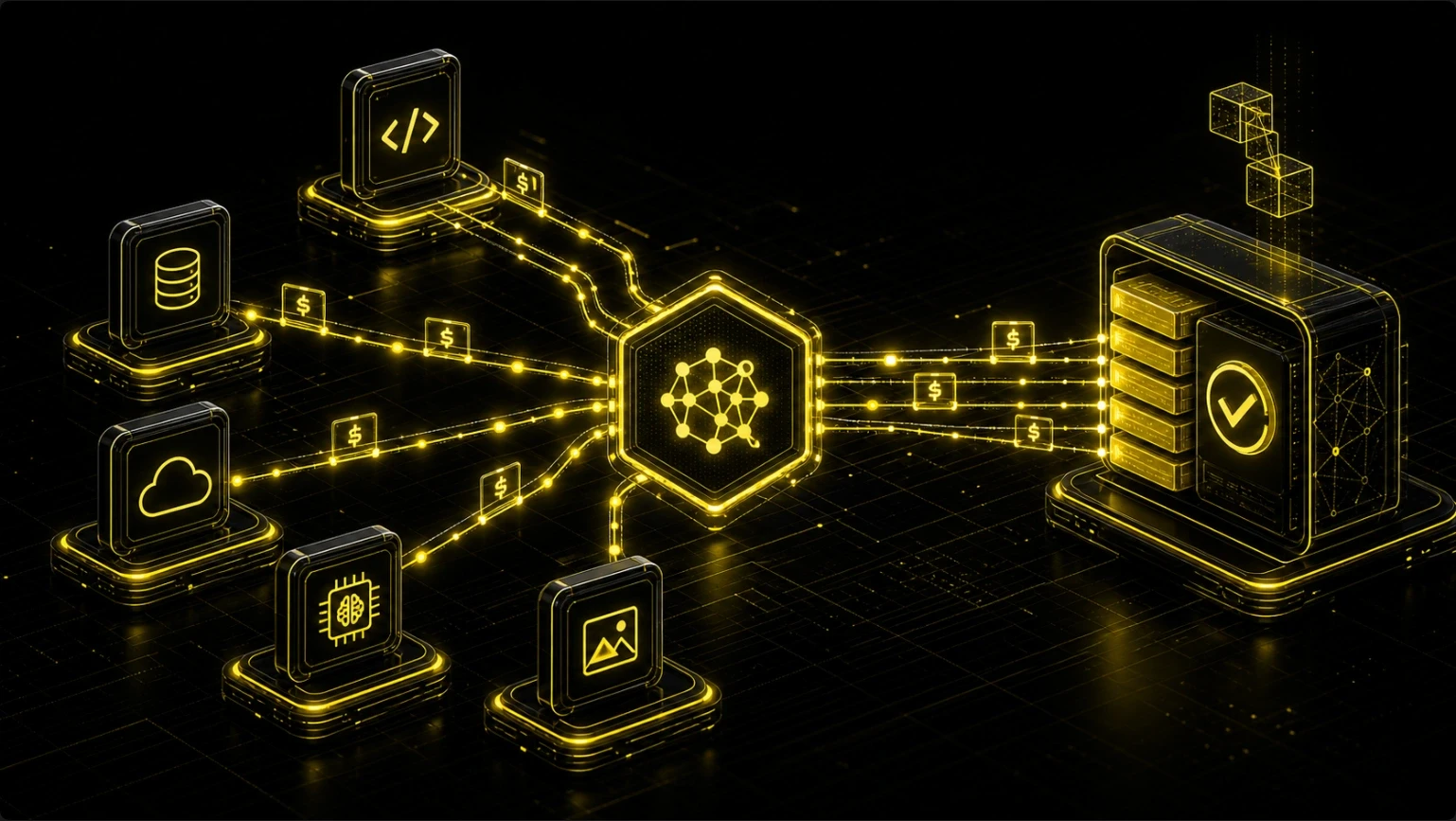

An AI agent does not browse an API provider's pricing page the way a person does. It discovers a task, selects a tool or endpoint, sends a request, and waits for a response. If the requested resource costs money, the commercial decision has to happen inside that request path.
That is the real value of x402 paid API access. The important unit is not a monthly account, a dashboard login, or a checkout screen. It is the agent-triggered request: a machine asks for a resource, the API tells the machine what payment is required, the agent decides whether the payment fits its policy, and access is granted only after verification.
For developers, this changes how paid services are designed. Instead of asking “How do we bill this user later?” the API asks “Should this specific request receive access now?” That is a smaller, more precise question, and it fits how agents actually use data, tools, and digital services.
The Request Is The Commercial Event
Human billing systems often separate usage from payment. A user signs up, adds a card, receives an API key, consumes resources, and gets charged later. That model works for many SaaS products, but it is not always natural for agent-triggered activity.
An AI agent might need one data lookup to finish a task. It might need a single quote from a pricing API, one compliance check, one model inference, one document conversion, or one search result from a specialized index. In those cases, forcing the agent through a subscription model can create more friction than the value of the request.
Paid API access with x402 treats the request as the commercial boundary. The endpoint can decide that a resource is paid, return a payment requirement, and deliver the response only after payment is verified.
This does not mean every request should be paid. Many APIs will still use free tiers, authentication, volume contracts, or account-based billing. The point is that x402 gives developers another access model: pay for this request, then receive this resource.
What Changes When An API Uses x402
In a normal API flow, an agent sends a request and receives a response. If access is denied, the reason is usually authentication, authorization, rate limiting, or missing credentials.
With x402, payment becomes another access condition. If the request targets a paid resource and does not include valid payment proof, the API can return HTTP 402 Payment Required. That response is not just an error. It is a machine-readable payment challenge.
The payment requirement can tell the client what amount is required, which asset is accepted, which network is used, where payment should go, and what proof must come back with the retried request. The agent can then evaluate the requirement against its own rules.
That evaluation step matters. Responsible agent payment infrastructure should not treat every payment request as automatically approved. A well-designed agent can check whether the amount is within budget, whether the service is allowlisted, whether the asset is approved, whether the action matches the user intent, and whether the payment is worth the expected output.
In other words, x402 paid API access does not remove authorization. It moves authorization closer to the request.
The Agent-Triggered Request Flow
A practical x402 flow for an agent-triggered API request looks like this:
The agent chooses an endpoint because it needs data, a tool result, a file, or a digital service.
The agent sends a request to the API.
The API checks whether the endpoint is paid and whether the request already includes valid payment proof.
If payment is missing or invalid, the API returns HTTP 402 Payment Required with a payment requirement.
The agent reads the requirement and checks policy rules such as amount, asset, destination, service identity, and budget.
If the request is approved, the agent signs or submits the payment and retries the API call with payment proof.
The API verifies the payment directly or through a facilitator-style verification and settlement layer.
After verification, the API returns the requested response, tool output, file, content, or product access.
The request is still the center of the workflow. The payment challenge, policy check, payment submission, verification, and delivery all orbit around the same resource request.
This is why agent-triggered paid access is different from simply adding a crypto payment button to an API business. The agent is not shopping in a storefront. It is resolving an access challenge in the middle of a task.
What Paid API Access Can Cover
x402 paid API access works best when the value can be priced and delivered digitally after the request is verified. Common examples include:
market data endpoints
blockchain data APIs
search and retrieval services
translation or summarization APIs
AI model calls
image, audio, or document generation
file conversion services
compliance or identity checks
premium datasets
paywalled content objects
downloadable digital products
agent tool executions
The common pattern is that the agent does not need a long relationship with the provider before the request. It needs a specific resource now. The provider needs a way to charge for that resource without creating a manual payment step.
That makes the model especially useful for long-tail services. A developer can expose a specialized endpoint to agents and charge only when the endpoint is actually used. The agent can decide whether the price is justified for the task at hand.
Design Choices Before You Price The Endpoint
Before turning an endpoint into a paid resource, developers need to decide how access should work. Pricing is only one part of the design.
Design choice | Question to answer | Why it matters |
|---|---|---|
Access unit | Is the paid item a request, record, tool call, file, or job? | The payment must map cleanly to what the agent receives. |
Price model | Is the price fixed, tiered, dynamic, or usage-based? | Agents need to evaluate cost before paying. |
Payment asset | Which asset or currency is accepted? | The agent wallet and policy engine must support it. |
Quote expiration | How long is the payment requirement valid? | Stale prices can create settlement and delivery disputes. |
Retry policy | Can the agent retry after payment? | Network failures should not always require a second payment. |
Delivery binding | What exactly does the payment unlock? | Payment proof should be tied to the intended resource. |
Refund or credit logic | What happens if payment succeeds but delivery fails? | Paid-but-denied cases need a clear operational response. |
For early implementations, fixed per-request pricing is often easier to reason about. The endpoint says the request costs a specific amount, the agent either pays or declines, and the API returns the result after verification.
Dynamic pricing can be useful for compute-heavy services, but it creates more complexity. If the final cost depends on tokens, runtime, data volume, or output size, the agent needs a maximum authorized amount and the provider needs precise metering.
The Tradeoff: Less Checkout, More Protocol Responsibility
x402 reduces checkout friction for machine customers. An agent does not need to create an account, wait for a key, navigate a payment page, or store credit card credentials. A paid endpoint can expose its price at the moment of access.
The tradeoff is that the API provider now owns more of the protocol-level responsibility. A paid request must be priced, challenged, verified, settled, and delivered correctly. If anything fails, the provider needs a clear state machine rather than a vague error page.
Key failure paths include:
the agent pays but the API times out
the agent retries and accidentally duplicates a request
the payment requirement expires before retry
the payment proof is reused for the wrong endpoint
the accepted asset is not supported by the agent wallet
settlement succeeds but the resource is not delivered
the request metadata reveals more than it should
These are not reasons to avoid paid API access. They are reasons to design it carefully. Machine-readable payments work best when the payment and resource are tightly bound, logs are complete, and edge cases are expected.
What The API Provider Must Verify
Before returning a paid response, the API provider needs to verify more than “some payment happened.” The system should verify that the right payment happened for the right request under the right conditions.
A practical checklist includes:
The payment amount matches the requirement.
The accepted asset and network match the endpoint policy.
The destination matches the merchant or service address.
The payment proof is valid and not expired.
The proof is bound to the requested resource or route.
The request has not already been fulfilled under the same payment.
The agent or client satisfies any identity or allowlist rule.
The resource can be delivered after verification.
Failed delivery can be retried, credited, or refunded according to policy.
Logs connect the quote, payment, verification result, and delivered response.
The last point is easy to underestimate. If a human customer complains about a subscription charge, support can inspect an account. With agent-triggered requests, the audit trail may need to reconstruct a single payment-gated API call. Quote, payment, retry, verification, and delivery should be visible as one event.
How Agent Builders Should Think About Approval
For agent builders, x402 paid API access creates a different problem: when should an agent be allowed to pay?
The answer should not be “whenever an endpoint asks.” Agents need spending rules. A simple policy engine might include:
maximum payment per request
daily or task-level budget
approved services
approved assets
blocked destinations
user confirmation thresholds
task relevance checks
logging requirements
This is where payment infrastructure becomes part of agent safety and reliability. A payment-capable agent needs enough autonomy to complete low-risk tasks, but not so much freedom that it can spend outside user intent.
For GOAT Network builders, AgentKit is relevant because GOAT positions it around onchain actions, x402 payments, and ERC-8004 identity. That combination matters for agent-triggered requests because payment alone is not the whole workflow. Developers also need execution, authorization, identity, and policy-aware behavior. Builders should verify current SDK capabilities, supported assets, and deployment requirements before production use.
When x402 Paid API Access Is A Good Fit
x402 paid API access is a strong fit when the resource is digital, the price can be stated before access, and the response can be delivered after payment verification.
It is especially useful for:
APIs with small but valuable responses
services with occasional or bursty agent demand
tools that agents may call only once inside a larger workflow
data providers that want per-request monetization
digital products that can be delivered immediately
services where subscription onboarding is too heavy
It is less straightforward when the service requires complex human review, uncertain pricing, long fulfillment windows, regulated customer onboarding, or high-risk purchases. Those cases may still use agent payments, but they need stronger identity, compliance, approval, and dispute handling.
The practical rule is simple: if the agent can understand the price, verify the service, stay within policy, pay programmatically, and receive the resource immediately, x402 can make paid access easier to integrate.
FAQ
What is x402 paid API access?
x402 paid API access is a way to make an API endpoint payable at the HTTP request layer. When an agent requests a paid resource, the API can return HTTP 402 Payment Required with payment details. The agent can then pay, retry the request, and receive the resource after verification.
How does x402 help with agent-triggered requests?
Agent-triggered requests need payment logic that machines can understand. x402 lets the API express the price and payment requirement inside the request-response flow, so the agent can decide whether to pay and continue the task.
Does x402 replace API keys and accounts?
x402 can reduce the need for API keys, accounts, sessions, or manual checkout in some paid-access flows. Some providers may still use accounts or identity checks for compliance, personalization, rate limits, analytics, or customer support.
What can developers sell through x402 paid API access?
Developers can sell API calls, data lookups, AI tool executions, model calls, generated reports, file conversions, digital content, downloadable assets, and other resources that can be delivered after payment is verified.
Can AI agents pay automatically with x402?
AI agents can be designed to pay programmatically, but they should not pay without limits. Responsible agent payment flows need budgets, allowlists, per-request caps, user approval thresholds, and audit logs.
The Request Becomes The Checkout
Paid API access with x402 is not just a new payment method. It changes where the commercial decision happens. For agent-triggered services, the request itself becomes the checkout boundary.
That model is useful because it matches how AI agents consume digital resources: one request, one requirement, one decision, one verified response. But it only works well when developers design the full lifecycle: pricing, payment requirement, policy approval, verification, settlement, delivery, retry, and audit.
For teams building agent-facing APIs, the next step is not to make every endpoint paid. It is to identify which requests are valuable enough to price individually and then build the infrastructure to handle those requests cleanly.