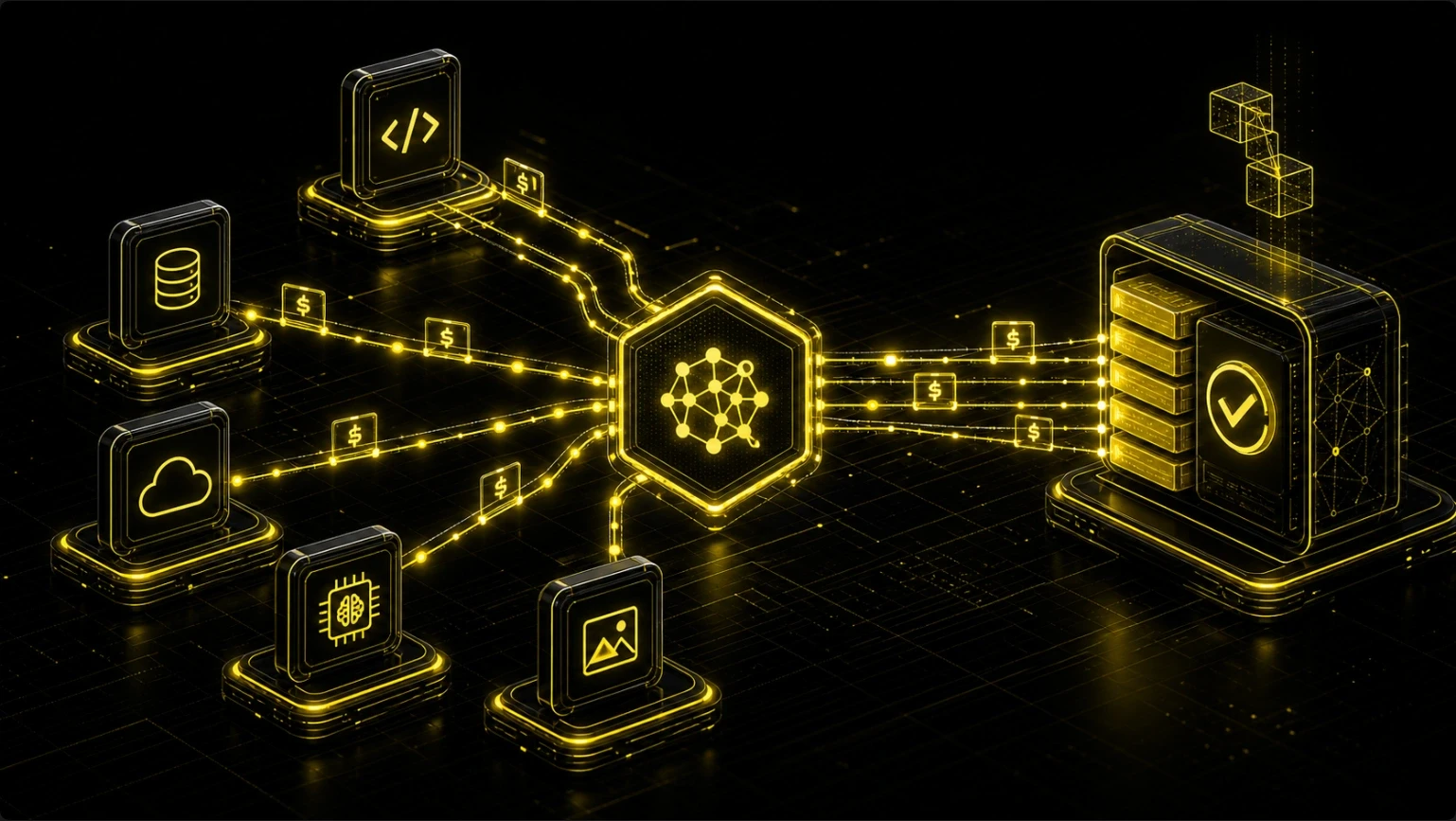

"AI agents without credit cards" should not mean free usage. It should mean paid access without forcing a machine customer through a human card checkout flow.
That distinction matters. A human can type card details, pass a hosted checkout page, handle receipts, reset account credentials, and decide whether a purchase looks suspicious. An AI agent calling an API or digital service cannot naturally use that pattern. It needs a payment method that fits machine-to-machine access: a request, a price, a policy check, a wallet-based payment, verification, and delivery.
Wallet-based access gives developers another path. Instead of asking the agent to behave like a person at checkout, the service can let the agent prove payment from an approved wallet or payment account and then return the requested resource.
Why Card Checkout Is Awkward For Agents
Card checkout was designed around human buyers and merchant workflows. It assumes the customer can inspect a page, enter payment details, approve a charge, pass fraud checks, and contact support if something goes wrong.
AI agents often need a narrower interaction. An agent may need one API result, one file conversion, one data lookup, one model call, or one tool execution. Sending that agent through a card form creates several problems:
The agent may not have a card number.
The developer may not want card credentials stored in an agent runtime.
The service may not want to create full accounts for one-off machine usage.
Manual checkout interrupts automated task execution.
Card flows can be hard to bind to a specific API request.
Chargeback and dispute assumptions may not match instant digital delivery.
Cards and virtual cards can still be useful, especially when an agent needs to buy from existing merchants that already accept cards. But for API access and programmable services, wallet-based payment can be a cleaner fit because the payment event can live inside the request flow.
What Wallet-Based Access Means
Wallet-based access means the agent can use a wallet or payment account to authorize payment for a specific resource. The wallet may hold a stablecoin, token, or other supported asset. It may be controlled directly, through a custody provider, through a smart account, or through a policy-aware signing service.
The wallet does not replace policy. It only gives the agent a way to execute approved payments.
A production system still needs a separate control layer that decides:
whether the service is allowed
whether the requested amount is within budget
whether the recipient is approved
whether the requested token and network are allowed
whether the payment is tied to the correct resource
whether a human approval step is required
whether the wallet authority should expire after the task
In other words, the wallet answers "how can the agent pay?" The policy system answers "should the agent pay this time?"
Card Checkout, Virtual Cards, And Wallet Access
Different payment models solve different problems. The right choice depends on the service type, trust model, and buyer workflow.
Model | Good Fit | Tradeoff |
|---|---|---|
Human card checkout | Consumer purchases and familiar merchant flows | Hard for autonomous agents to complete safely |
Virtual cards for agents | Existing merchants that already accept cards | Still inherits card-network assumptions and card-data controls |
API keys with billing | Known developer accounts and recurring usage | Requires onboarding before the agent can use the service |
Prepaid credits | Predictable repeat usage | Adds balance management and account state |
Wallet-based access | Machine-native APIs, tools, data, and digital services | Requires wallet security, policy enforcement, and payment verification |
Wallet-based access is strongest when the resource is digital, the price is clear, and the service can verify payment before delivery. It is weaker when the transaction depends on shipping, long dispute windows, regulated eligibility checks, or human negotiation.
How A Wallet-Based Request Flow Works
A basic wallet-based service flow can be simple:
The AI agent requests a paid API, tool, file, dataset, or digital service.
The service returns a payment requirement instead of the protected resource.
The payment requirement includes amount, accepted asset, recipient, network, expiry, and request context.
The agent runtime sends the requirement to a spending policy layer.
The policy layer checks budget, allowlist, task scope, recipient, and limits.
If approved, the wallet signs or submits the payment.
The agent retries the request with payment proof.
The service verifies the payment directly or through a facilitator.
The service delivers the requested resource after verification and settlement rules are satisfied.
The system logs payment, policy decision, delivery state, and errors.
x402-style flows are relevant because they use HTTP 402 Payment Required as a machine-readable payment signal. The server can return payment instructions, the client can pay programmatically, and the service can deliver the resource after verification.
The product shift is important: payment is no longer a separate checkout page. It becomes part of service access.
What Agents Can Access This Way
Wallet-based access is most useful for services that can be priced, verified, and delivered digitally. Examples include:
search API calls
market data snapshots
blockchain data queries
model inference
image generation
translation
file conversion
identity or compliance checks
report generation
software license activation
agent tool execution
paid content or downloadable resources
The common pattern is that the agent needs a result, not a shopping cart. A wallet-based payment flow lets the service sell that result directly.
Controls Matter More Without Card Checkout
Removing card checkout does not remove risk. It moves risk into the agent payment stack.
Developers need to design for:
spending caps per request
daily or task-level budgets
approved service domains or recipient addresses
supported assets and networks
payment expiry windows
idempotency for retries
replay protection
settlement verification before delivery
rate limits for automated requests
logging for audit and debugging
refund handling for paid-but-not-delivered cases
emergency revocation of wallet authority
The most dangerous design is an agent with broad wallet access and vague instructions. A safer design gives the agent narrow authority: small budget, approved services, limited duration, explicit task scope, and clear refusal behavior.
What API Providers Need To Build
For service providers, wallet-based access is not just a payment button. It changes how the endpoint behaves.
A provider should decide the paid unit before implementation. Is the agent buying a successful response, a compute attempt, a generated file, an enriched record, or temporary access to a resource? That answer determines pricing, retries, and refunds.
A practical provider checklist:
Define the paid resource clearly.
Return the payment requirement before doing expensive work.
Bind payment to the exact resource, amount, recipient, and expiry.
Verify payment before returning protected output.
Use idempotency keys so retries do not double-charge.
Reject stale payment proofs.
Log request, payment proof, verification status, and delivery status.
Define refund or remediation behavior for delivery failures.
Rate-limit automated traffic.
Publish enough pricing information for policy engines to approve or reject payment.
This design treats the agent as a machine customer. It does not need a card form. It needs a clear price, a valid payment path, and a reliable delivery rule.
Wallet-Based Access Still Needs Identity
Payment proof tells the service that value moved or was authorized. It does not fully answer who the agent is, whether the agent is reputable, or whether the request should be trusted.
For many low-risk digital services, payment plus rate limits may be enough. For higher-value or abuse-prone services, developers may also need identity and reputation signals. A service may want to distinguish between a known developer's agent, a newly created agent, a high-volume automation system, and an unknown requester.
GOAT Network is relevant to this broader infrastructure category because its agent stack includes AgentKit, x402 payments, and ERC-8004 identity. That combination points to a fuller model: agents need payment capability, but they also need policy, identity, reputation, and settlement-aware execution. Developers should still verify current SDK behavior, supported assets, and operational assumptions before building production flows.
When Cards Still Make Sense
Wallet-based access is not a universal replacement for cards.
Cards may still be the better option when an agent buys from existing merchants, handles travel or procurement workflows, operates inside corporate expense systems, or needs compatibility with businesses that already use card acceptance. Virtual cards can also provide familiar spending limits and merchant controls.
Wallet-based access is more natural when the seller is an API, data service, model endpoint, tool provider, or digital service built for machine customers from the start.
The practical future is likely mixed: cards for existing commerce, wallets for machine-native access, and policy engines to decide which rail an agent can use for each task.
Machine Access Without Card Checkout
AI agents without credit cards are not agents without payment. They are agents that can access paid services through a payment flow designed for software.
Wallet-based access makes the payment event request-scoped, verifiable, and programmable. It lets a service ask for payment before delivery and lets an agent pay without storing card credentials or completing a human checkout flow.
The goal is not maximum autonomy. The goal is bounded service access: a machine customer can pay for a resource when the request, price, recipient, policy, and delivery conditions all line up.
Explore AgentKit if you are building agent workflows that need wallet actions, x402 payment flows, identity, and policy-aware service access.
FAQ
What does "AI agents without credit cards" mean?
It means agents can access paid services without going through a human card checkout flow. The service can use wallet-based payment, request-level payment requirements, and verification before delivery.
Is wallet-based access the same as free access?
No. Wallet-based access is still paid access. The difference is that payment is authorized through a wallet or payment account instead of a card form.
Why are credit card checkouts difficult for AI agents?
Card checkout often assumes a human can enter details, review a page, confirm a purchase, and manage disputes. AI agents usually need machine-readable payment requirements and automated verification.
What controls should wallet-based agent payments include?
They should include spending caps, budgets, allowlists, supported assets, payment expiry, idempotency, settlement verification, audit logs, and revocation paths.
When are cards still useful for AI agents?
Cards or virtual cards can still be useful when an agent needs to buy from existing merchants that already accept cards. Wallet-based access is usually better suited to APIs, tools, and digital services designed for machine customers.